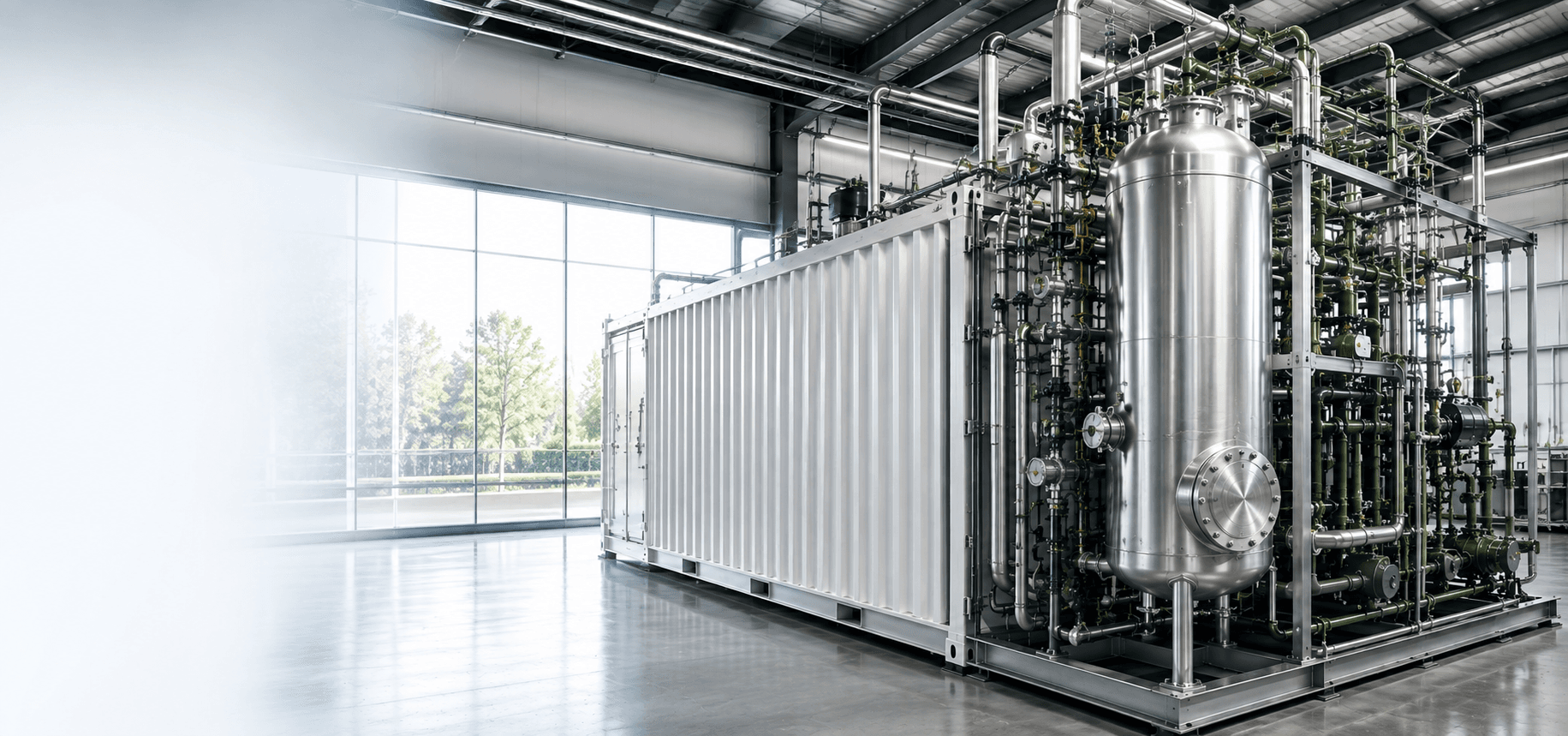
Biological Methanation Technology
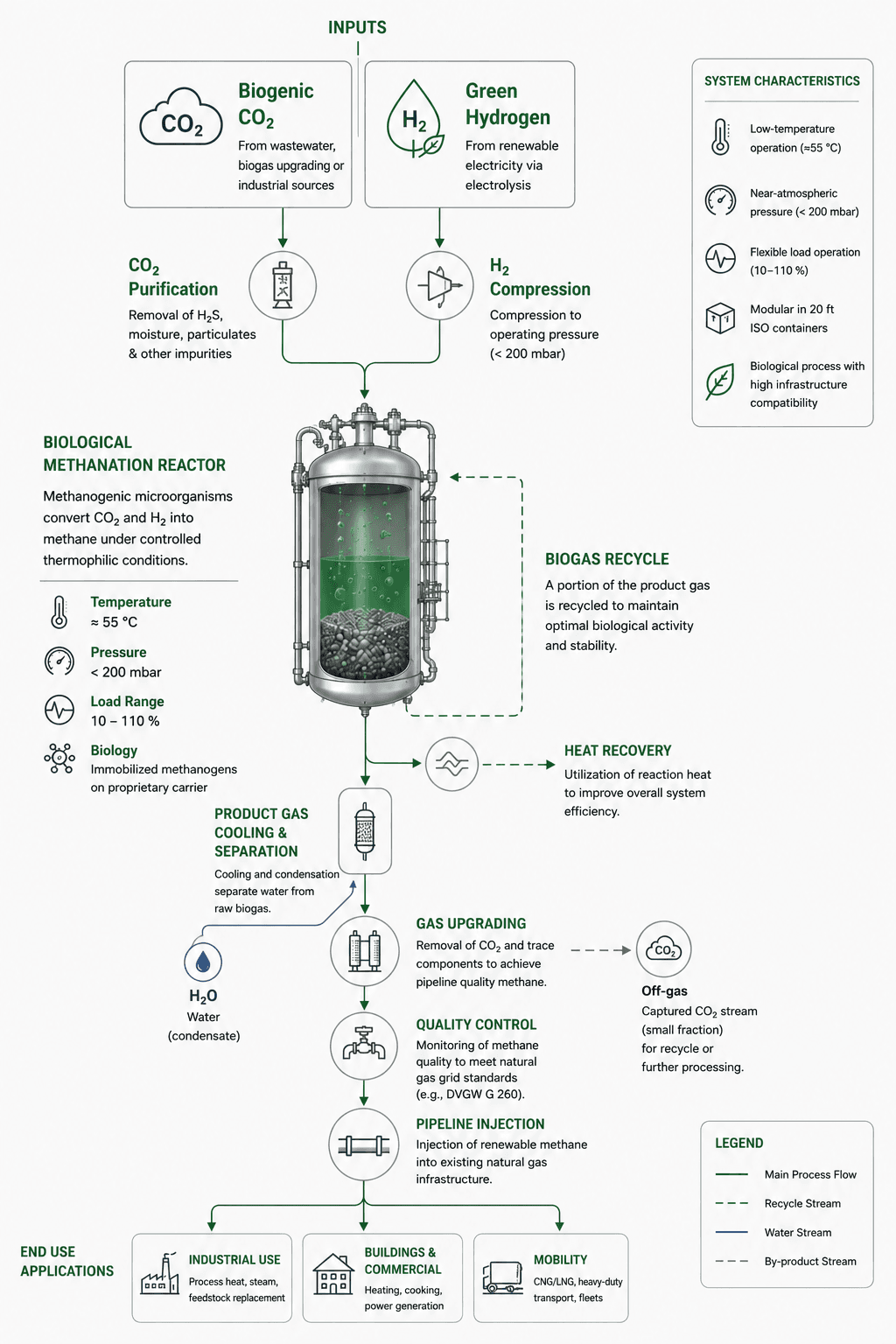
Methanica converts biogenic carbon dioxide (CO₂) and green hydrogen (H₂) into renewable methane (CH₄) through a controlled biological process. Using naturally occurring methanogenic microorganisms, the system operates under mild conditions inside standardized modular reactor units for industrial deployment.
Converting CO₂ into Renewable Methane
Inside the biological reactor, methanogenic microorganisms continuously convert biogenic carbon dioxide and renewable hydrogen into methane. The process operates under controlled thermophilic conditions and produces renewable methane suitable for existing gas infrastructure.
Biological Reaction
Methanogenic microorganisms catalyze the biological conversion under controlled reactor conditions.
Reactor Biology
- →Methanogenic microorganisms
- →Immobilized carrier media
- →Continuous gas conversion
- →Stable biological process
Process Output
- ✓Renewable Methane (CH₄)
- ✓Water (H₂O)
- ✓Pipeline-quality gas
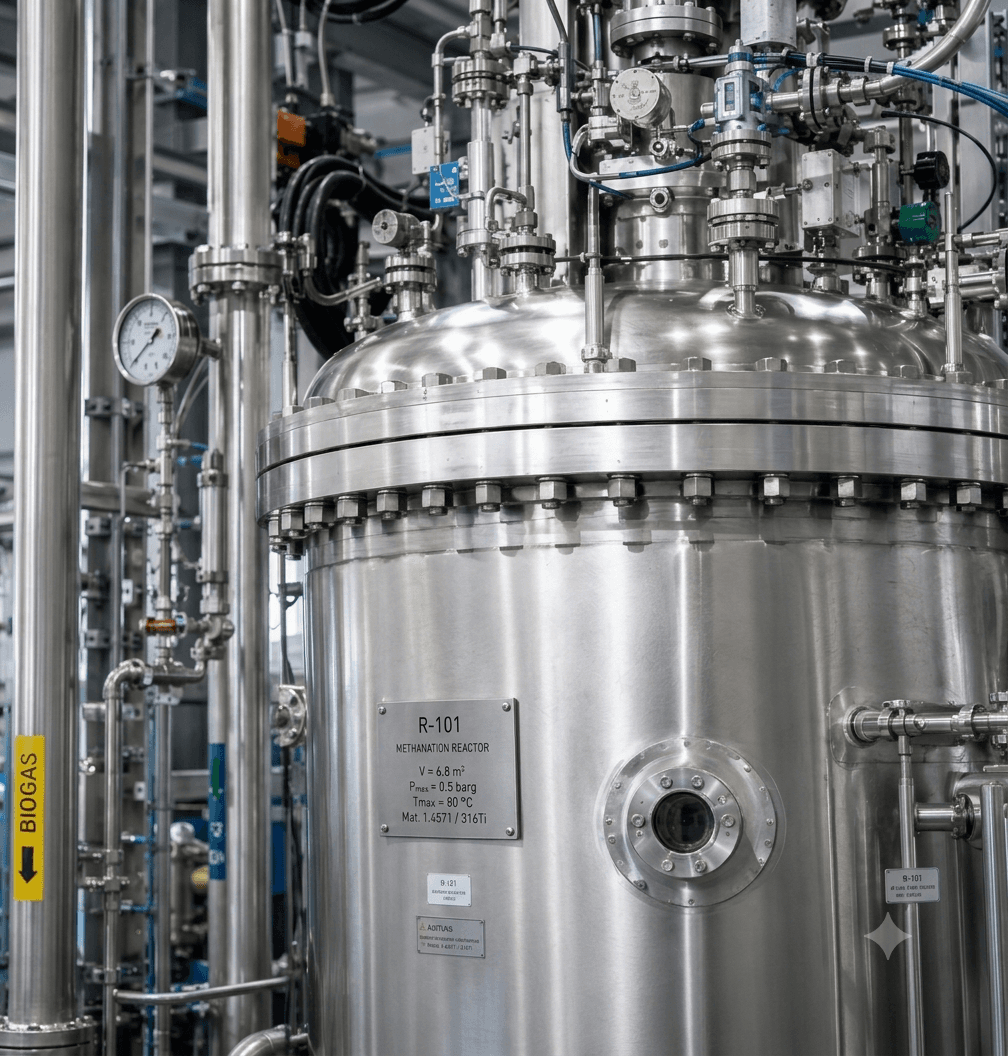
Engineering Specifications
Current design parameters of Methanica's biological methanation technology.
Process Temperature
Thermophilic biological operation
Operating Pressure
Near-atmospheric process
Power-to-Gas Efficiency
Including reaction heat
Operating Load
Flexible renewable operation
Container Module
Standardized MSU design
Why Biological Methanation?
Biological methanation provides an alternative approach to conventional catalytic systems by operating under mild conditions while maintaining compatibility with renewable hydrogen production and existing gas infrastructure.
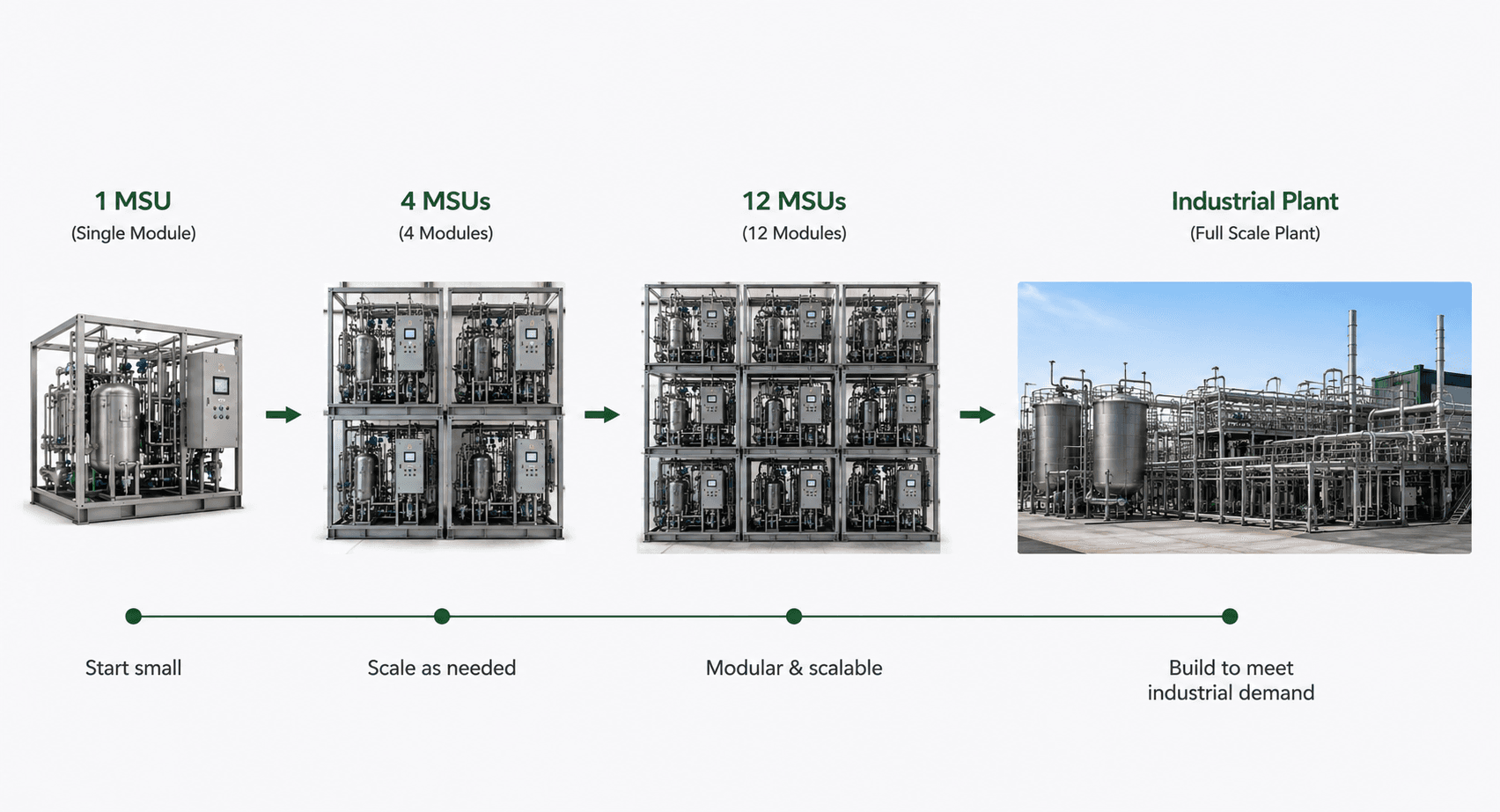
Standardized Modular System Units
Methanica's Modular System Units (MSUs) are standardized reactor systems designed for scalable deployment. Capacity is increased by adding identical modules, enabling installations from pilot facilities to large industrial plants.
Engineering Performance Estimator
Estimate system size, hydrogen demand, methane production, electrolysis capacity, and operating requirements based on the available CO₂ stream from your facility.
Nm³/h raw-gas CO₂ after processing · biogas, sewage gas, industry. Rule of thumb: a 500 kW biogas plant delivers around 120–150 Nm³/h CO₂.
Forgone CO₂ revenue is deducted (80 €/t).
30 €/MWh · PPA — 140 €/MWh · grid supply. This alone determines whether the project pays off.
Method: conversion rate 0.96 · CH₄ heating value (LHV) 9.97 kWh/Nm³ · 4,000 operating hours/year · number of MSUs = ⌈VCO₂/50⌉ · H₂ demand = VCO₂ · 4 · electrolysis capacity = VCO₂ · 4 · 4.7/1000. Regulatory conditions: hydrogen must be RFNBO-compliant (additionality plus geographic and temporal correlation per Delegated Regulation (EU) 2023/1184; monthly temporal correlation until 2029, hourly from 2030); certification via an EU-recognized system required (ISCC EU, REDcert, CertifHy); the product must reach the transport sector to count toward the BImSchG sub-quota. Model calculation based on TRL 5 development status. No operating data. Not an offer.
Technology Validation
Methanica is progressing from laboratory validation toward industrial demonstration through modular pilot deployment.