From CO₂ Sources to Renewable Methane Production
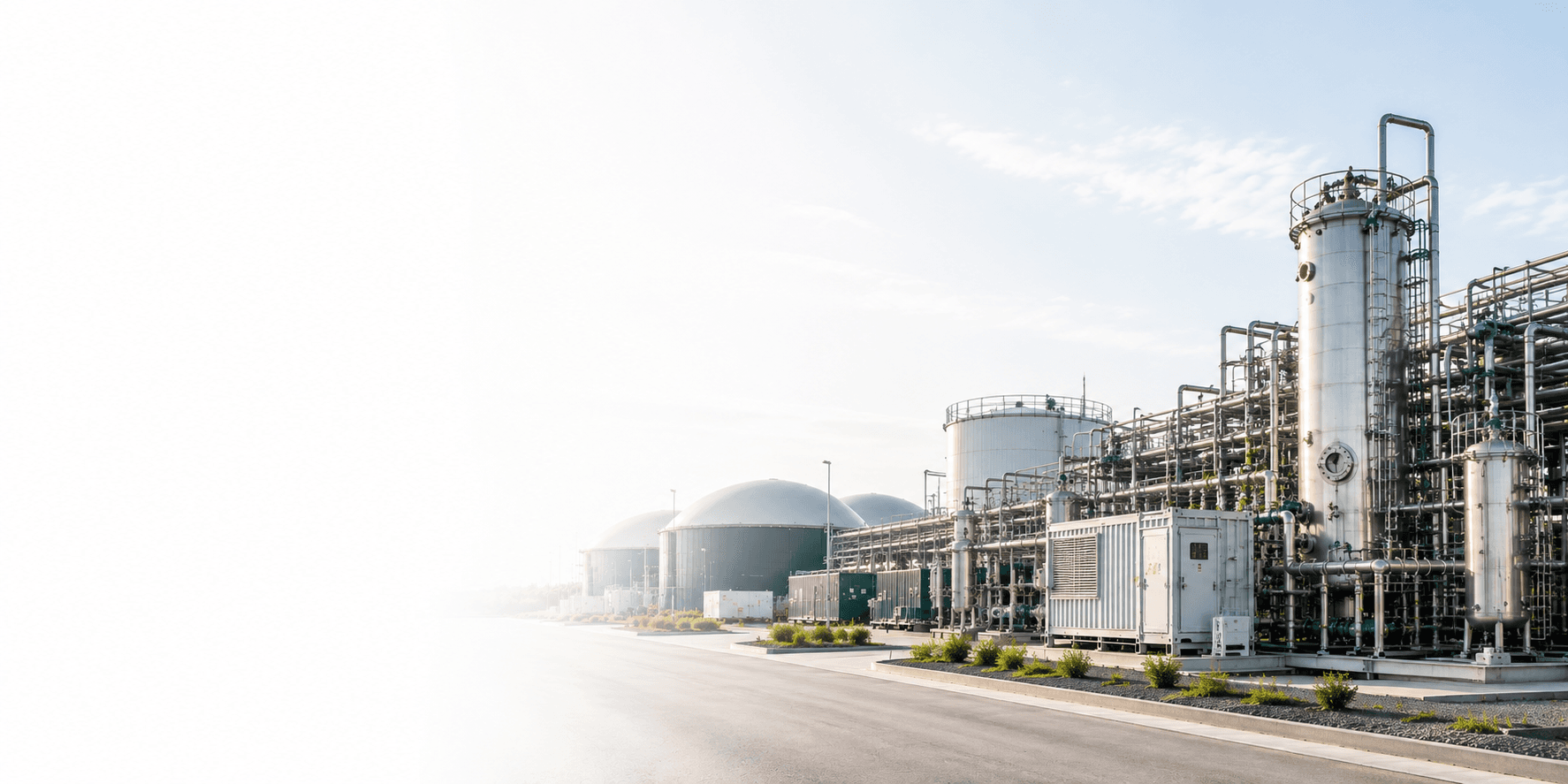
Methanica's biological methanation technology integrates with existing industrial processes to convert biogenic carbon dioxide and renewable hydrogen into renewable methane. The modular system is designed for wastewater treatment plants, biogas facilities, and concentrated industrial CO₂ sources, enabling scalable deployment without replacing existing gas infrastructure.
Designed for Multiple CO₂ Sources
Methanica's standardized Modular System Units (MSUs) are designed to process different concentrated CO₂ streams. Capacity is expanded by combining multiple reactor modules according to the available gas flow.
.png&w=3840&q=75)
Sewage Gas Plants
CO₂ from digester gas processing at municipal wastewater treatment plants — a concentrated residual stream that has gone unused until now.
.png&w=3840&q=75)
Biogas Plants
Rule of thumb: a 500 kW biogas plant delivers around 120–150 Nm³/h of raw-gas CO₂ — ready to feed directly into an MSU cascade.
.png&w=3840&q=75)
Industrial CO₂ Sources
Concentrated process off-gases from industry — scalable up to large-plant scale, in series-connected arrays.
Fits into Existing Plant Infrastructure
Methanica integrates with existing industrial assets rather than replacing them. Biological methanation connects available CO₂ streams with renewable hydrogen production and existing gas infrastructure to create renewable methane.
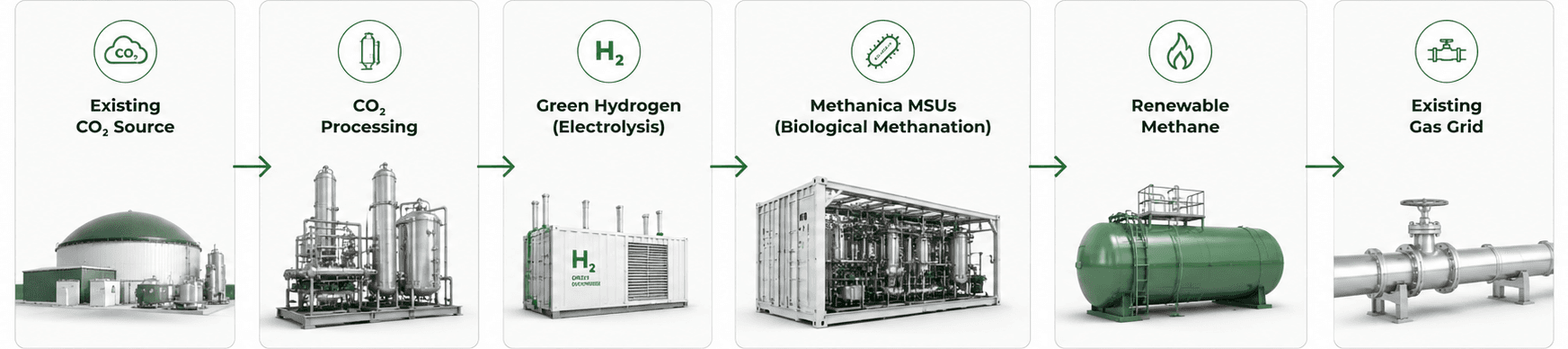
No replacement of downstream gas infrastructure is required. Renewable methane can be injected into the existing natural gas grid using established infrastructure.
The Value Comes from Compliance
Renewable methane produced from green hydrogen and captured CO₂ qualifies for RFNBO applications under the current regulatory framework. The economic value is driven by compliance requirements rather than conventional natural gas pricing.
Penalty for Non-Compliance
Germany's RED III implementation introduces a dedicated RFNBO transport sub-quota. Fuel suppliers that do not meet the required targets must pay a statutory penalty.
Expected Market Value
As long as regulatory compliance remains less expensive than paying the statutory penalty, a pricing corridor is expected to develop below the penalty threshold.
Biomethane Does Not Meet the RFNBO Sub-Quota
Conventional biomethane contributes toward the general greenhouse gas reduction quota but does not qualify for the RFNBO transport sub-quota. Only methane produced from renewable hydrogen and captured CO₂ satisfies the RFNBO requirements.
Where Methanica Creates Value
The modular biological methanation process is suitable wherever concentrated CO₂ streams and renewable electricity are available.
.png&w=1080&q=75)
.png&w=1080&q=75)
.png&w=1080&q=75)
.png&w=1080&q=75)
.png&w=1080&q=75)
.png&w=1080&q=75)